
Knee range of motion
How to measure knee flexion at home
Check how far your knee bends and how straight it gets, with a phone photo or a goniometer. It takes about a minute.
By Joe Armeli, DPT, physical therapistUpdated
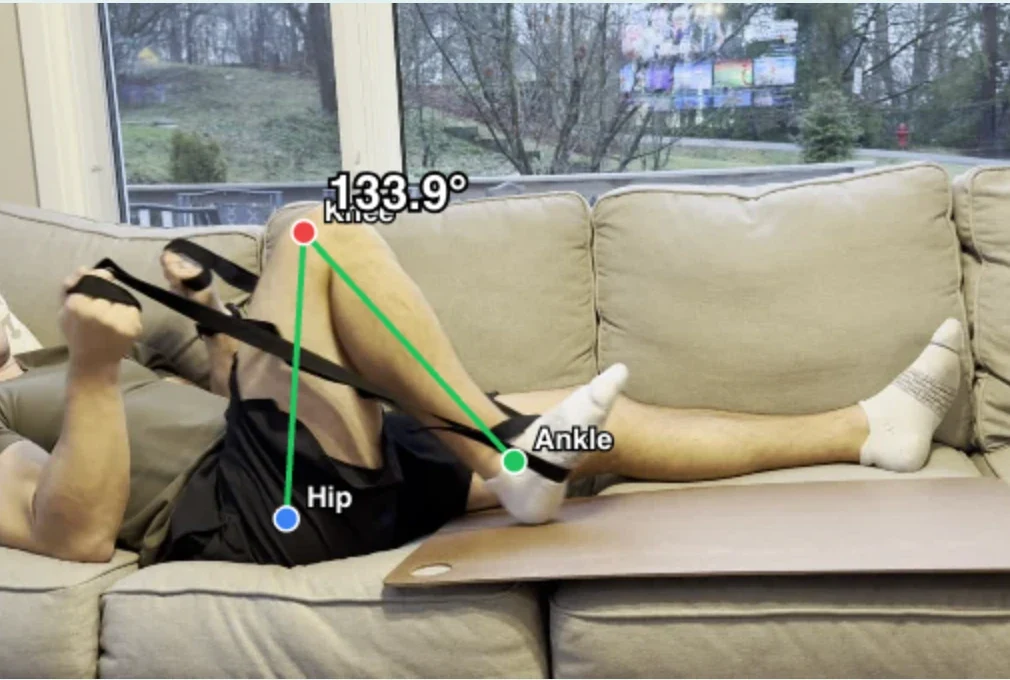
The short answer
Lie on your back and slide your heel toward your bottom as far as you comfortably can. Take a side photo at knee height with your hip, knee and ankle showing, then read the angle with the free knee angle test or a goniometer.
What the numbers mean
A knee angle counts up from a straight leg. Flexion is how far your knee bends, so a bigger number means more bend. Extension is how straight it gets, and the goal is 0°. If your knee stops 5° short of straight, that's a 5° extension loss.
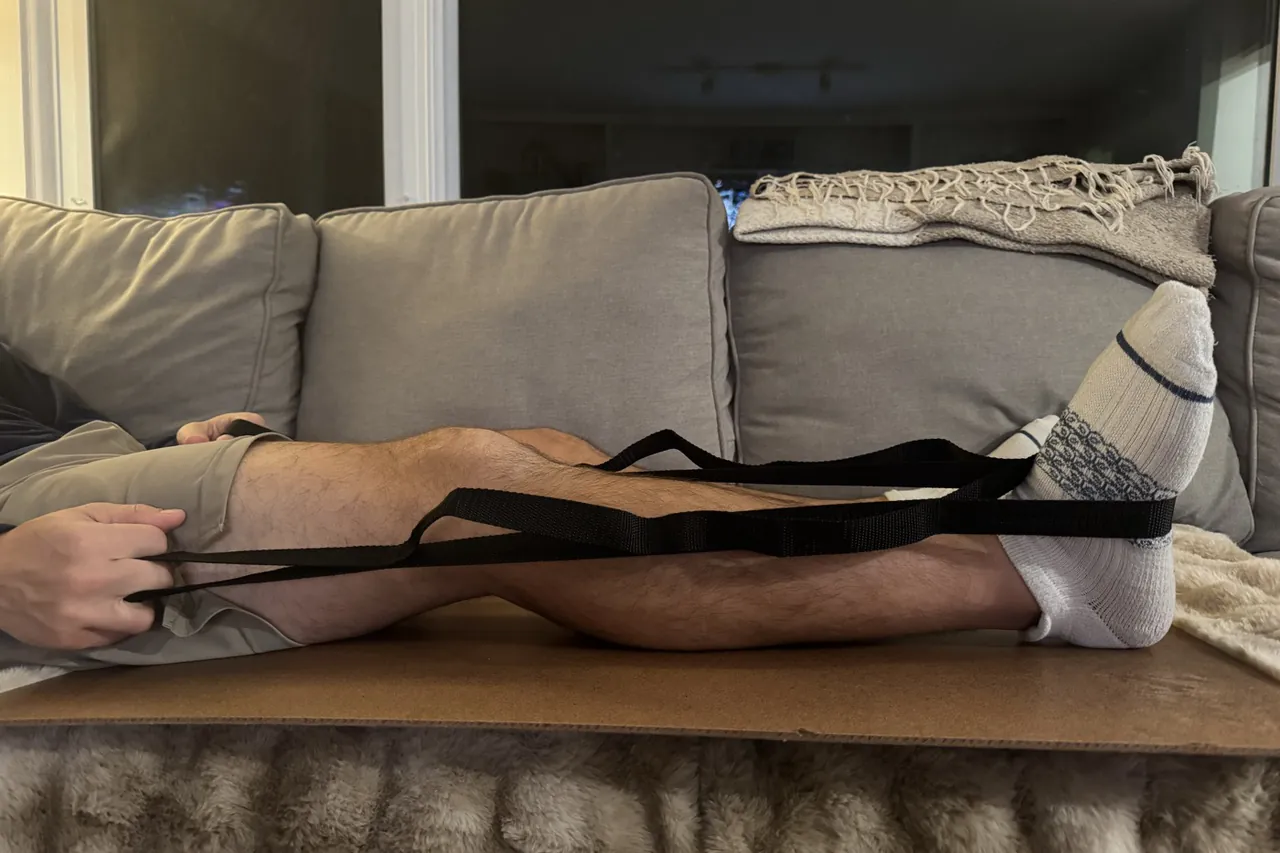 Straight · 0°
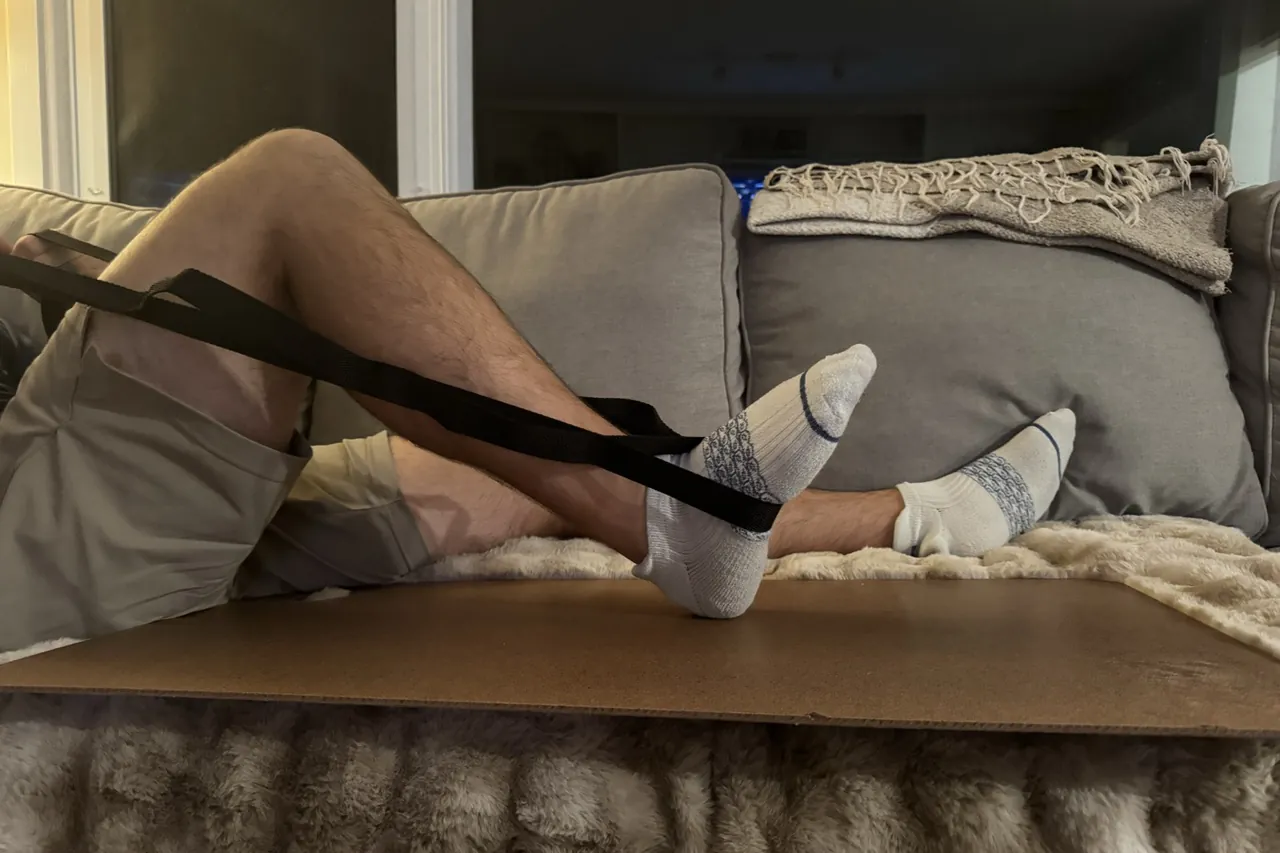 Bent · flexion
Method 1
Measure with a phone photo
You need nothing but your phone. You measure in the heel slide position, lying on your back.
Lie on your back
Lie on a bed or the floor with both legs out straight.
Slide your heel toward your bottom
Bend your knee by sliding your heel toward your bottom as far as you comfortably can. This is a heel slide, the same exercise most people do after knee replacement.
Set the phone side-on at knee height
Prop your phone on a chair or nightstand beside you, level with your knee, or ask someone to hold it. Your hip, knee and ankle all need to be in the picture. Shorts or a rolled-up pant leg help.
Take the photo at your deepest bend
Hold the bend for a second and take the photo. A timer or a helper makes this easier.
Upload it to the free knee angle test
The test marks your hip, knee and ankle and gives you the angle. You can drag the dots if one is off. Your photo stays on your phone.
Method 2
Measure with a goniometer
A goniometer is the plastic hinge your PT uses. New to heel slides? They are in our exercises after knee replacement guide.
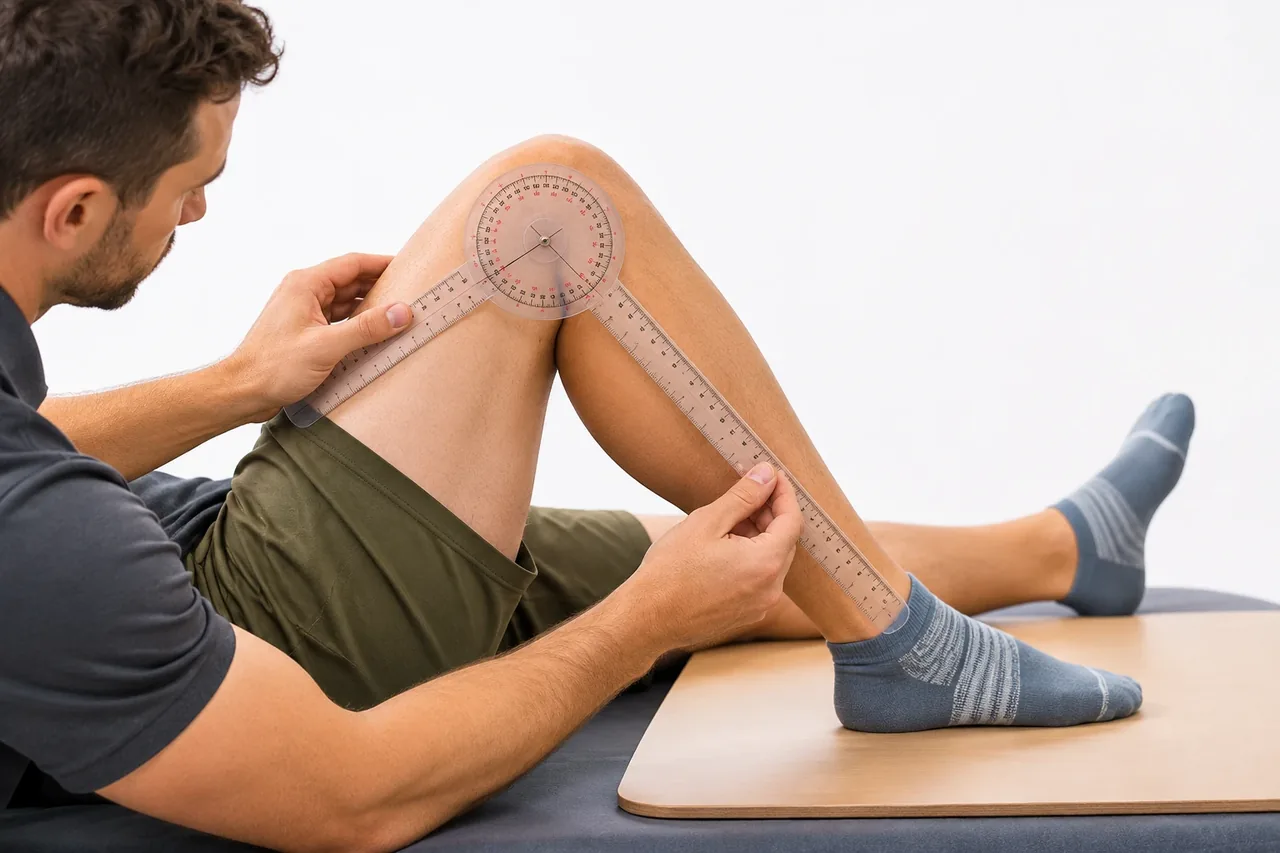
Lie on your back and do a heel slide
Slide your heel toward your bottom as far as you comfortably can, and hold it there.
Put the hinge on the outside of your knee
The centre of the hinge goes on the bony bump on the outside of your knee.
Point one arm at your hip
Line one arm up with the bony point on the outside of your hip.
Point the other arm at your ankle
Line the other arm up with the bone on the outside of your ankle.
Read the number
Read the angle off the dial before you let the knee go.
| Phone photo | Goniometer | |
|---|---|---|
| Needs | Your phone | A goniometer |
| Cost | Free | A few dollars |
| Time | About a minute | A minute or two |
| Helper | Optional. A timer works | Much easier with one |
| Best for | Tracking your bend week to week | The last few degrees of straightening |
How to measure knee extension (straightening)
After a knee replacement, getting the knee fully straight early is the top priority. If yours isn't getting there, it's worth a call to your surgeon or PT.
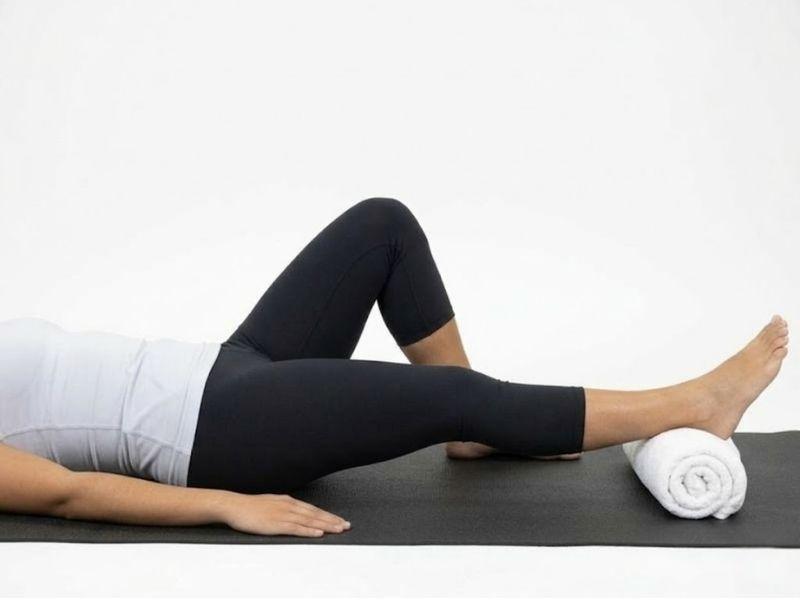
Lie on your back with your heel on a rolled towel
Put a rolled towel or foam roll under your heel, so the back of your knee is off the bed.
Relax and let the knee sink
Let the knee sink toward straight on its own. Don't push it down with your hands.
Take a side photo, or line up the goniometer
Take a side photo at knee height with the leg you are measuring nearest the camera, or line the goniometer up on the same three points: hip, knee and ankle.
Read how far you are from straight
A reading of 0° is fully straight. Anything above 0° is how far you are from straight. The free knee angle test shows this as a small knee flexion number.
A photo is a rough guide here. Near straight, a few degrees matter, and a photo reading can be off by more than that. Check that the dots sit on the leg you are measuring, and use a goniometer or ask your PT when you need the last few degrees.
Five mistakes that throw off the number
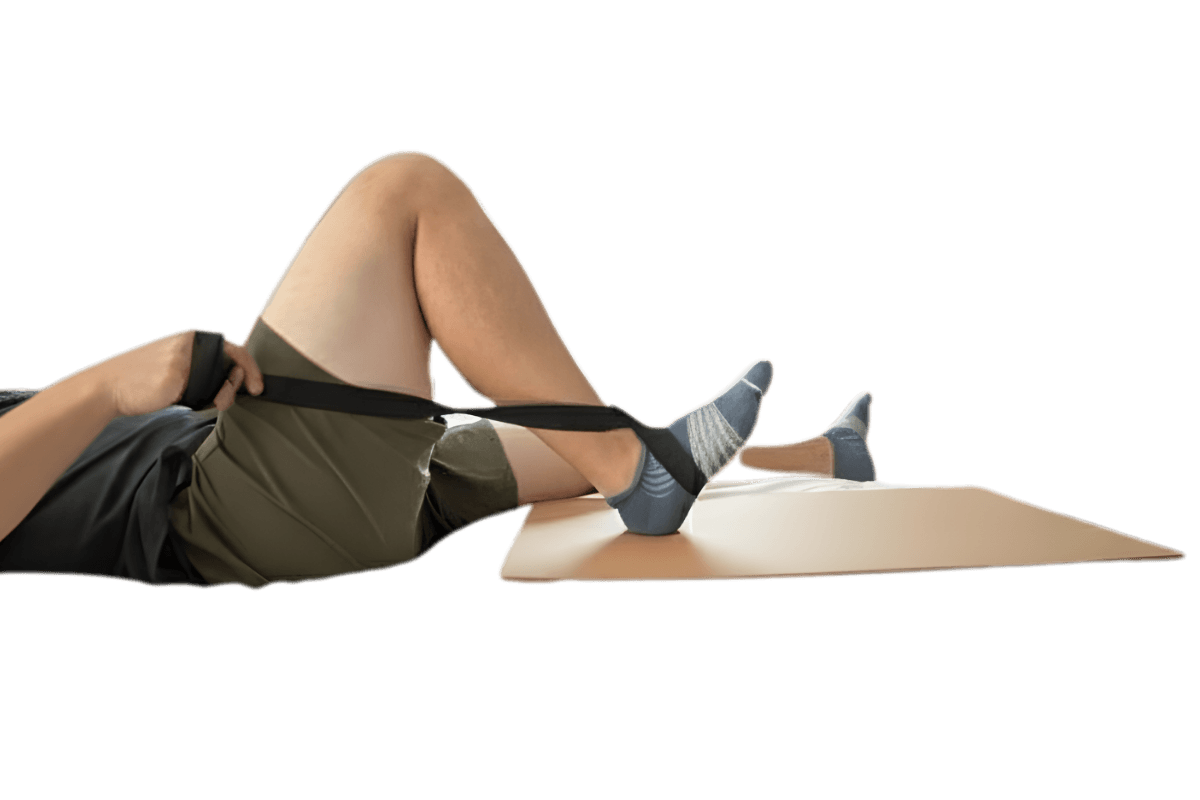 Hip in frame
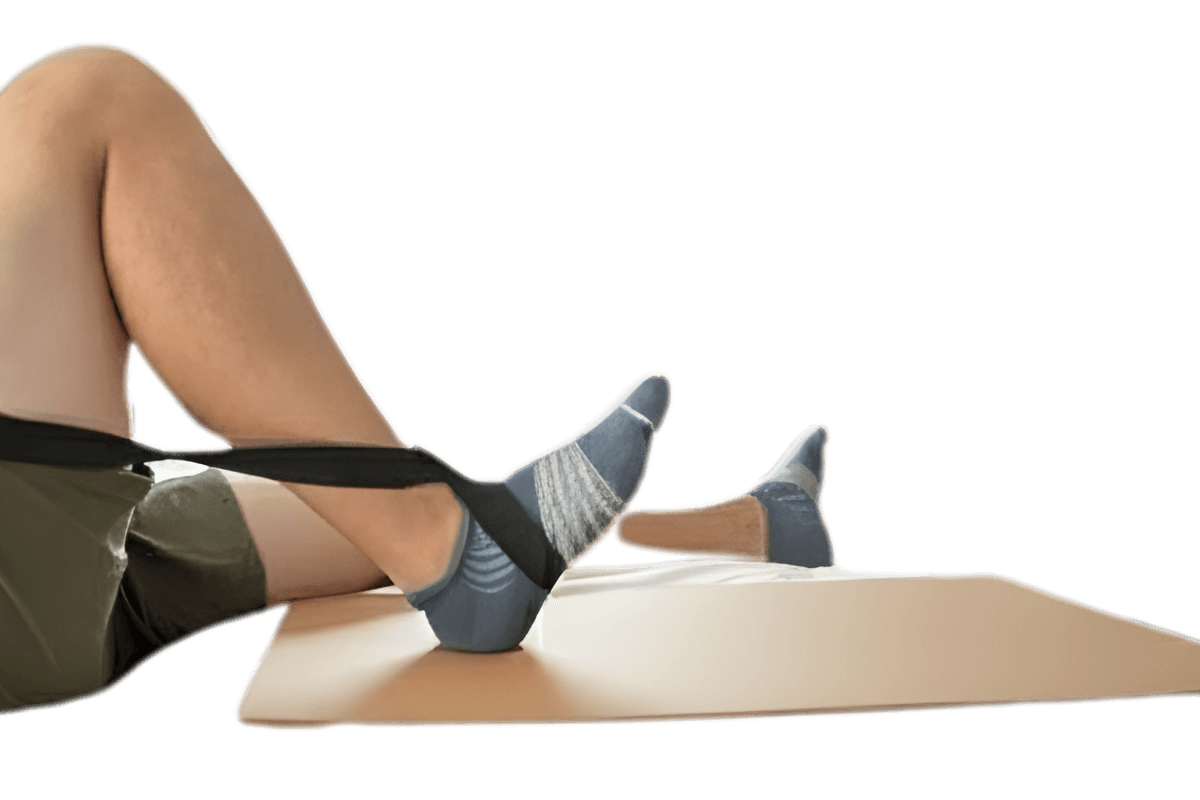 Hip cut off
The camera isn't side-on
Even a small angle changes the reading. The phone should look straight at the side of your knee.
The camera is too high or too low
Keep it level with your knee, not looking down from standing height.
Your hip or ankle is out of the picture
All three points have to show. Loose clothing that hides the joint throws it off too.
You change position between readings
Sitting and lying give different numbers. Measure lying on your back every time.
You compare a morning knee with an evening knee
A stiff morning knee and a warmed-up evening knee read differently. Measure at the same time of day.
What your number means
This is about how much knee bend everyday things take.
| Activity | Knee flexion |
|---|---|
| Walking | about 60–75° |
| Going up and down stairs | about 80–90° |
| Sitting in a chair | about 90° |
| Standing up from a chair | about 95° |
| Getting into a car | about 100–110° |
Want to know what's typical week by week? See EquipCore's guide to knee bend after knee replacement, week by week, or check your number against our knee range of motion chart.
Common questions
- Can I measure knee flexion without a goniometer?
- Yes. Lie on your back, bend your knee as far as you comfortably can, and take a side photo at knee height with your hip, knee and ankle in the picture. The free knee angle test on this site reads the angle from that photo.
- How accurate is a home knee measurement?
- Any single reading can be off by around 10°, even with a goniometer. That is why one number matters less than the trend. Measure the same way each time and watch where it goes over weeks.
- Should I measure sitting or lying down?
- Lying on your back, every time. Sitting and lying give different numbers, so switching between them makes your progress hard to read.
- How often should I measure after knee replacement?
- Daily for the first 6 weeks, weekly from weeks 6 to 12, and monthly after that. Daily numbers are how you spot a trend, so don't sweat any single reading.
- What does 0 degrees mean for a knee?
- 0° is a fully straight leg. Flexion counts up from there as the knee bends, so a bigger number means more bend. If your knee stops 5° short of straight, that is a 5° extension loss.